

by Lena Milioni
In today’s high-pressure professional environments, confidence isn’t just a personal asset—it’s a career-defining quality that influences everything from daily interactions to major career milestones.
The key to developing and cultivating authentic confidence in the workplace lies in moving beyond quick fixes and addressing the root causes of self-doubt. Whether you’re seeking career advancement or simply wanting to feel more comfortable in your professional skin, using evidence-based techniques will empower you to show up as your most confident self.
Understanding Self-Esteem and Self-Worth
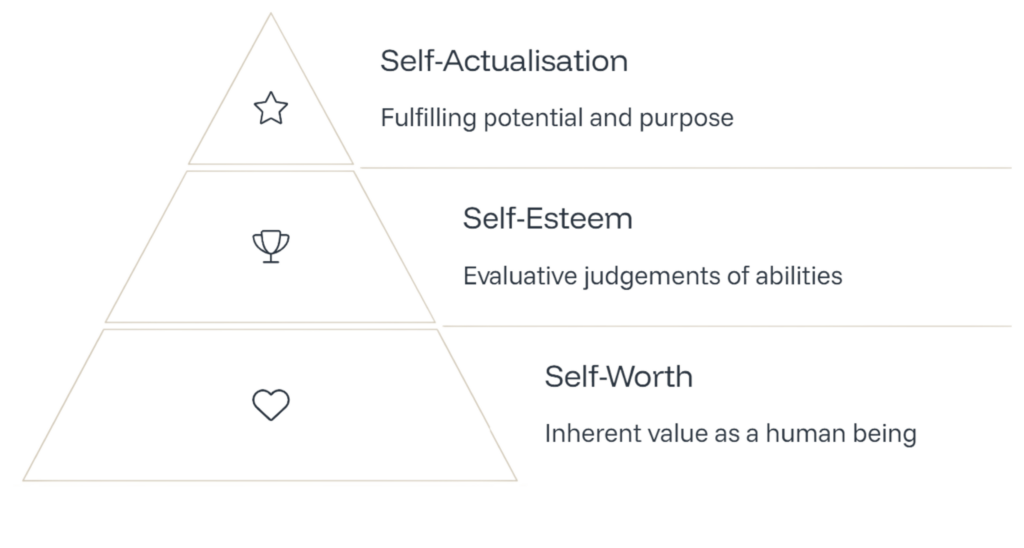
Self-esteem and self-worth form the foundation of workplace confidence. While self-esteem reflects how we evaluate our abilities and performance, self-worth encompasses our inherent value as human beings regardless of achievements.
These internal beliefs significantly impact our professional lives, affecting everything from how we communicate ideas to whether we pursue promotions. Many professionals struggle to separate their worth from their work, leading to validation-seeking behaviours that undermine genuine confidence.
Workplace confidence is the ability to trust your skills, judgement and capabilities in professional settings. It involves recognising your value whilst acknowledging areas for growth without harsh self-criticism. Building healthy self-esteem requires recognising your intrinsic value whilst acknowledging that performance fluctuates naturally throughout your career journey.
The Confidence Gap: Internal vs. External Experience
Internal Experience
What we feel inside often includes uncertainty, self-doubt, and awareness of our own flaws and shortcomings. We experience our fears, insecurities and the full complexity of our thoughts.
- Full access to private worries, fears and doubts
- Awareness of past mistakes and failures
- Heightened sensitivity to potential rejection
- Overestimation of personal inadequacies
External Perception
What others see is typically a more polished, capable version of ourselves. They lack access to our internal doubts and instead observe our competencies, successes and composed exterior.
- No access to our private thoughts
- Greater awareness of our strengths
- Perception filtered through their own insecurities
- Assumption of greater confidence than we feel
This disconnect between how we feel internally and how others perceive us creates the “confidence gap.” Understanding this gap helps us realise that feeling uncertain doesn’t mean we appear that way to others. Confidence isn’t about eliminating doubt but about acting purposefully despite it.
Common Confidence Obstacles in the Workplace
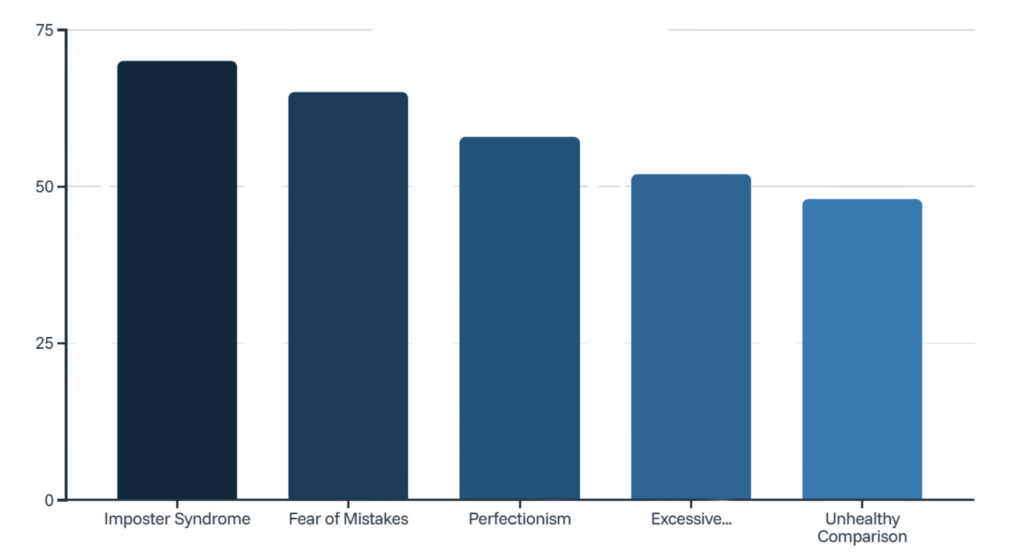
Many professionals encounter significant barriers to confidence development. The fear of making mistakes often leads to hesitancy and missed opportunities. This combines with the overwhelming desire to be universally liked, causing people to suppress honest opinions and authentic self-expression.
Working excessive hours frequently stems from a need to prove one’s worth, while constant comparison with colleagues creates an unproductive mental treadmill of inadequacy. These patterns gradually erode self-trust and increase susceptibility to imposter syndrome—the persistent feeling of being a fraud despite evidence of competence.
Recognising these patterns is the crucial first step toward developing sustainable confidence strategies.
Overcoming Perfectionism and Imposter Syndrome
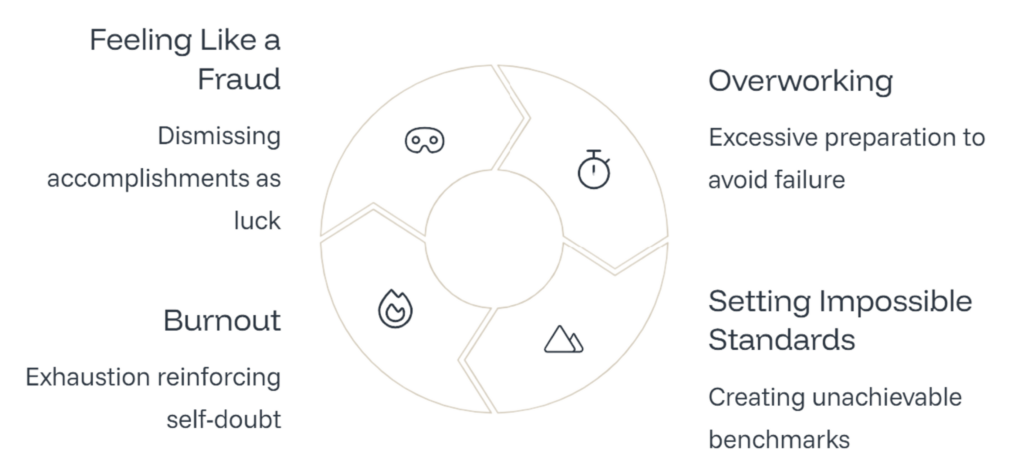
Perfectionism and imposter syndrome create a debilitating cycle in professional settings. The relentless pursuit of flawlessness sets impossible standards, whilst imposter syndrome whispers that any success is merely luck or deception that will eventually be exposed.
This toxic combination leads to decision fatigue as professionals overthink choices, fearing the consequences of any imperfection. Breaking free requires recognising that mistakes are essential learning opportunities and that competence develops through practice rather than appearing fully-formed.
By embracing a growth mindset, you can transform these internal critics into constructive guides for continuous improvement rather than obstacles to confidence.
Silencing Your Inner Critic
The inner critic operates as an internal saboteur, undermining confidence through persistent negative self-talk. This critical voice often originates from internalised external judgements and past experiences, becoming so familiar that many people mistake it for objective reality.
Transforming this relationship begins with identification—recognising when criticism becomes unhelpful rumination rather than constructive feedback. By understanding these patterns, you can replace destructive thoughts with balanced perspectives that acknowledge both strengths and growth areas.
Self-compassion plays a crucial role in this transformation, allowing professionals to treat themselves with the same kindness they would offer colleagues facing similar challenges.
Identify Critic
Recognise negative thought patterns Notice when your inner voice becomes harsh, judgemental or catastrophic. Pay attention to absolutist language like “always,” “never,” or “I have to/ need to…”
Challenge Validity
Question evidence supporting criticisms. Ask yourself: ” Is it a fact or my opinion? What evidence contradicts it? Would I speak this way to someone I care about?”
Reframe Narratives
Create balanced thought alternatives that acknowledge both challenges and strengths.
Practice Compassion
Respond with self-kindness.
Building Self-Compassion: The Cornerstone of Authentic Confidence
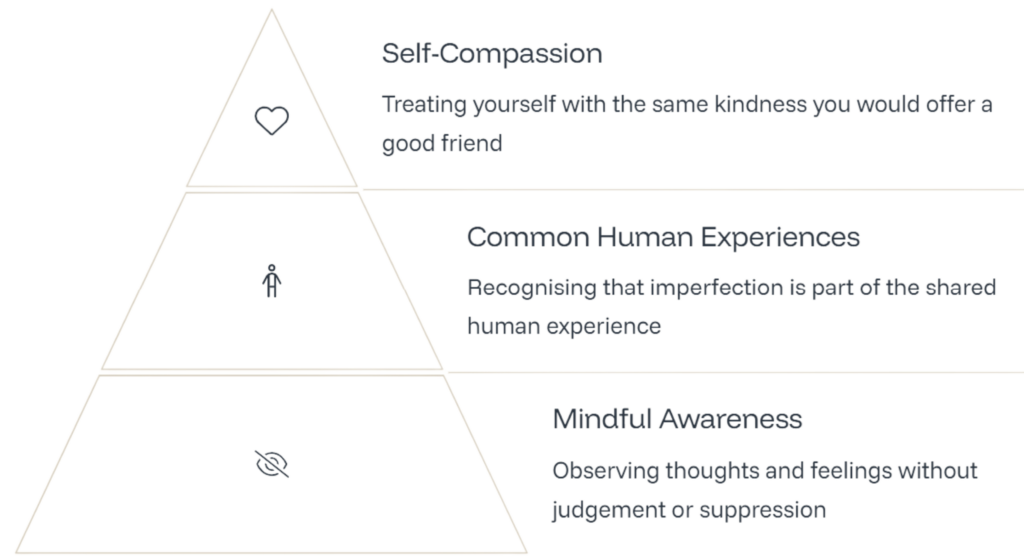
Self-compassion forms the foundation for sustainable confidence. Unlike confidence built solely on achievement, self-compassion provides a stable base that remains even when you face setbacks. By treating yourself with kindness during difficult moments, you create psychological safety that allows for authentic growth and resilience.
Remember that confidence is a practice rather than a destination. Through continued self-awareness, compassionate self-correction, and consistent action, you can cultivate a genuine sense of workplace confidence that emanates from within rather than depending on external validation.
Practical Tools for Boundary Setting and Assertiveness
Confidence in the workplace manifests through clear boundaries and assertive communication. Many professionals struggle with saying “no” or expressing needs directly, fearing negative perceptions or relationship damage. However, healthy boundaries actually strengthen professional relationships by establishing mutual respect.
Assertiveness involves expressing opinions and needs clearly without aggression or apology. This skill can be cultivated through specific language techniques, such as using “I” statements and avoiding unnecessary qualifiers that undermine your message.
Regular practice of these skills gradually builds confidence in your right to occupy professional space authentically, transforming workplace interactions.
Powerful Posture
Standing tall with shoulders back and spine aligned projects authority while actually triggering confidence-boosting hormonal changes.
Engaged Eye Contact
Maintaining comfortable eye contact during conversations demonstrates security in your ideas without appearing aggressive.
Purposeful Gestures
Using deliberate hand movements enhances verbal communication while preventing nervous fidgeting that undermines your message.
Voice modulation
Speak at a measured pace with deliberate pauses. Lower the pitch of your voice slightly and project from your diaphragm rather than your throat. Eliminate qualifying phrases like “I just think” or “I’m sorry, but…”.
Integration: From Self-Doubt to Authentic Confidence
True workplace confidence integrates internal self-trust with external expression, creating authenticity that resonates with colleagues and leadership. This integration requires consciously identifying limiting beliefs and self-sabotaging patterns that keep you trapped in cycles of doubt.
By rewriting shame-based narratives into stories of growth and resilience, you transform past challenges into foundations for genuine confidence. Regular visualisation practices strengthen this integration, allowing you to mentally rehearse bringing your authentic self to professional scenarios.
Remember that confidence isn’t about eliminating all doubt—it’s about developing trust in your ability to navigate uncertainty with courage and integrity. As you implement these strategies, you’ll create a self-reinforcing cycle where each authentic expression builds greater confidence for future challenges.
Awareness
Recognise patterns of self-doubt and their impact on your professional life, identifying specific triggers and manifestations unique to your experience.
Transformation
Apply targeted strategies to challenge limiting beliefs, practicing new behaviours that align with your authentic professional identity.
Integration
Embody confidence holistically through regular practice, until authentic self-expression becomes your natural state rather than a conscious effort.